
Agriculture in Telangana: A Growing Backbone of Rural Economy DEMO
Agriculture in Telangana: A Growing Backbone of Rural Economy DEMO
 learning_master_admin
 Agriculture in Telangana has seen remarkable growth since the state’s formation. The youngest state of India, carved out of Andhra Pradesh in 2014, has emerged as a strong agricultural hub in recent years. With vast stretches of fertile land, a largely rural population, and an increasing government focus on irrigation and farmer welfare, agriculture in Telangana continues to thrive and evolve.
In this post, we delve into the agricultural landscape of Telangana, the major crops grown, irrigation methods, challenges faced, and the government’s role in boosting farm productivity and sustainability.
Geographical and Climatic Factors
Agriculture in Telangana benefits from the state’s location on the Deccan Plateau and its semi-arid climate. Telangana is endowed with varied soil types such as red sandy loam, black cotton soil, and alluvial soil, making it suitable for a wide range of crops. The state receives most of its rainfall during the southwest monsoon, between June and September, which plays a crucial role in the cropping cycle.
Key Crops in Agriculture in Telangana
Agriculture in Telangana is largely dependent on two crop seasons: Kharif (June–October) and Rabi (November–March). Some of the major crops include:
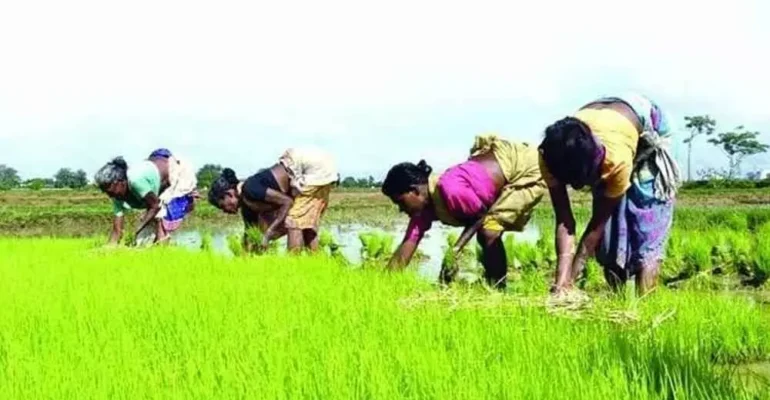
- Paddy (Rice): The most important food crop, with extensive cultivation in districts like Karimnagar, Nizamabad, and Warangal.
- Cotton: Telangana ranks among the top cotton producers in India.
- Maize: Used for food, fodder, and industrial uses.
- Red gram (Tur) and Green gram: Widely grown pulses in the Rabi season.
- Chilies and Turmeric: High-value crops grown in specific belts like Warangal and Nizamabad.
Horticulture is also gaining traction with crops like mango, banana, guava, and citrus fruits being cultivated in large areas.
Irrigation and Water Resources
Traditionally rain-fed, agriculture in Telangana has significantly improved with investments in irrigation. The Kaleshwaram Lift Irrigation Project (KLIP), one of the world’s largest multi-stage lift irrigation schemes, is a game-changer. It aims to irrigate over 45 lakh acres and stabilize agriculture across the state.
Other irrigation sources include tanks, tube wells, and canals. The revival of tanks under the Mission Kakatiya scheme has rejuvenated many water bodies and boosted groundwater levels.
Government Initiatives for Agriculture
The Telangana government has introduced several progressive schemes aimed at empowering farmers and making agriculture sustainable and profitable:
- Rythu Bandhu Scheme
A direct income support scheme where farmers receive ₹5,000 per acre per crop season to invest in inputs like seeds and fertilizers. - Rythu Bima Scheme
A life insurance scheme providing ₹5 lakh to farmers’ families in case of death due to any cause. - Free Power Supply
Farmers are provided free electricity for agriculture, helping reduce input costs. - Procurement and MSP Support
The state procures crops like paddy and maize at Minimum Support Prices (MSP), ensuring price stability for farmers. - Digital Tools and Farmer Data
Telangana is also implementing digital platforms to track land records, crop status, and weather to help farmers make informed decisions.
Technology and Modern Farming Practices
Farmers in Telangana are slowly shifting from traditional to modern practices. The use of drip irrigation, polyhouses, organic farming, and precision agriculture is gaining popularity. Several startups and agri-tech companies are helping farmers adopt smart tools, crop advisory apps, and satellite imagery for efficient farming.
The Telangana State Agricultural University (PJTSAU) and Krishi Vigyan Kendras (KVKs) also play a vital role in training farmers and conducting research.
Challenges faced by Agriculture in Telangana
Despite progress, agriculture in Telangana faces certain challenges:
- Unpredictable Rainfall and Climate Change effects.
- Debt Burden among small and marginal farmers.
- Post-Harvest Losses due to inadequate storage and market infrastructure.
- Soil Degradation from excessive use of chemical fertilizers.
Addressing these challenges requires a collaborative approach involving farmers, the government, and the private sector.
Sustainable Agriculture in Telangana
Sustainability is becoming a central theme in Telangana’s agricultural policies. Emphasis on organic farming, crop diversification, water conservation, and climate-resilient crops is growing. Farmer Producer Organizations (FPOs) are being promoted to improve market access and collective bargaining power.
The future of agriculture in Telangana looks promising, with a blend of traditional wisdom, modern science, and government support driving its transformation.
Conclusion
Agriculture in Telangana is not just a livelihood – it’s the heart of the rural economy. With proactive governance, innovative farming practices, and farmer-centric schemes, the state is setting an example for agricultural progress in India. Continued investment in infrastructure, climate-smart technologies, and market reforms will ensure that Telangana’s farmers reap the benefits of a truly green revolution.

